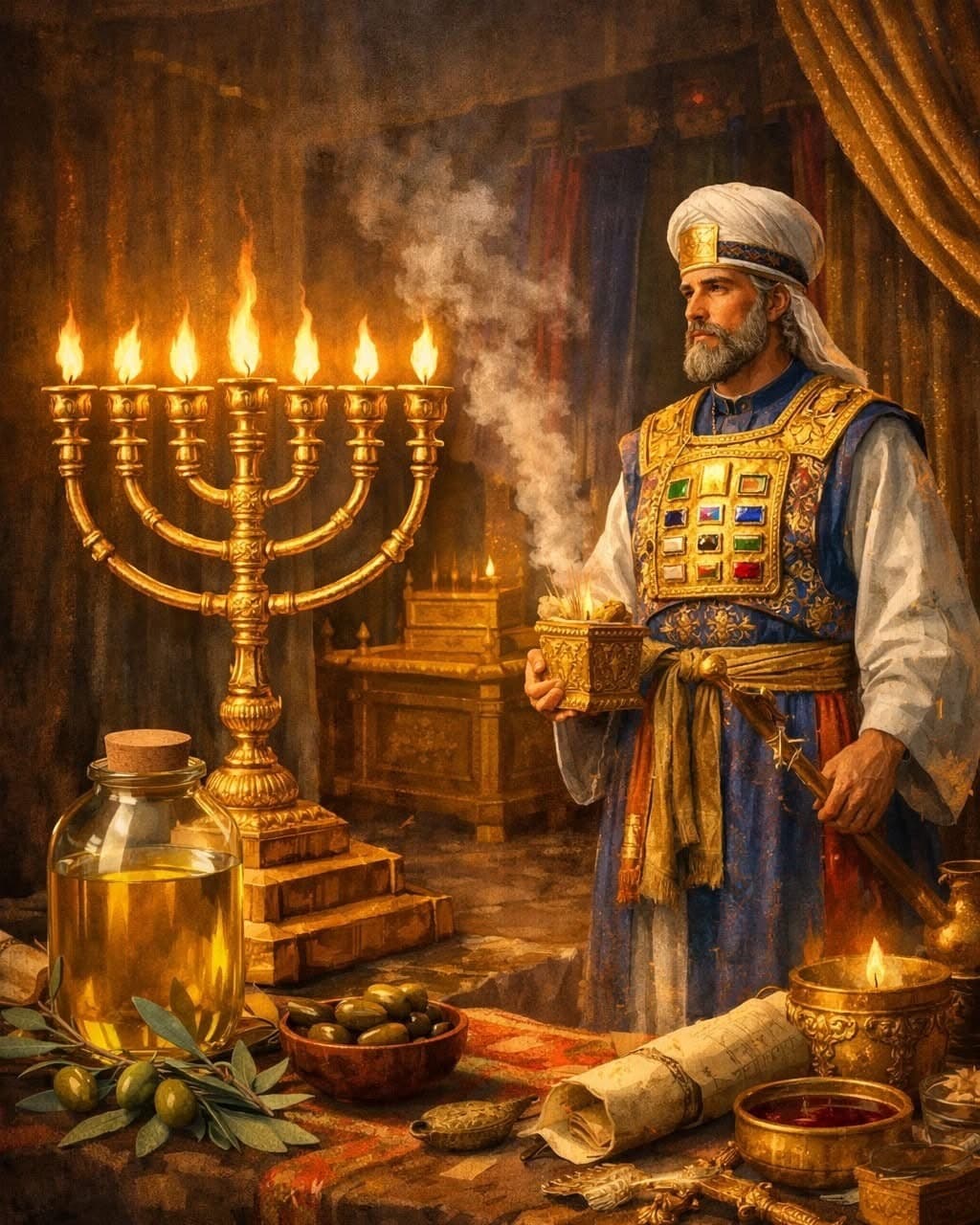
In Leviticus 23, the LORD lists a series of “appointed times” — in Hebrew, the moedim. The word means a set time or an appointment, like a date circled on a calendar. These are God's own appointments: the weekly Sabbath, Passover, Unleavened Bread, Firstfruits, Pentecost (Shavuot), Trumpets, the Day of Atonement, and Tabernacles (Sukkot).
Many believers have never been taught about the feasts, or assume they were only for ancient Israel. But Scripture calls them “the feasts of the LORD” — His, not merely Israel's — and the apostle Paul describes them as “a shadow of the things to come, but the substance belongs to the Messiah” (Colossians 2:17). They are like signposts, each one pointing to Yeshua.
Consider how beautifully they line up. Yeshua died at Passover, the spotless Lamb. He was in the tomb during Unleavened Bread, and rose on Firstfruits. The Spirit was poured out at Shavuot (Pentecost). The fall feasts — Trumpets, Atonement, and Tabernacles — point ahead to His return and the day He will dwell with His people forever. The whole story of redemption is written into the calendar.
So why do we keep them? Not to earn anything, and not out of obligation — salvation is by grace through faith in Yeshua alone. We keep them because they are good gifts that teach us, anchor us in the story of Scripture, and draw our hearts again and again to the Messiah. They are rehearsals of what God has done and what He has promised to do.
If the feasts are new to you, don't feel overwhelmed. Start simply. Come learn with us, ask questions, and watch how each appointed time opens up the Word in a fresh way. The Father set these times apart — and there is joy in keeping them together.